







Sign the
commitment



For many children and young people, smartphones bring connection, creativity and fun, but alongside that comes a quieter, often unseen pressure. Pressure to reply quickly, to keep up with conversations, to compare themselves to others, and to always be “on”.
Over time, that can begin to affect sleep, confidence and mood, sometimes leaving children feeling overwhelmed without really understanding why.
We also know that the online world can expose children to things they’re not always ready for, whether that’s unkind behaviour, pressure from others, or content that feels upsetting or confusing. The challenge is that this isn’t something they have to go looking for; it can appear at any time, often when they are on their own and without immediate support around them.


There is now a growing body of UK evidence linking smartphone and social media use with children’s mental health. Young people who struggle to manage or step away from their phone use are significantly more likely to experience anxiety, low mood and disrupted sleep. At the same time, many are navigating online spaces where comparison, pressure and, in some cases, bullying are part of everyday life.
It’s also important to look beyond just “screen time”. What matters just as much is what that time is replacing, sleep, proper rest, face-to-face connection, and the chance to switch off. When those things begin to reduce, we often start to see a knock-on effect on emotional wellbeing, confidence and resilience.
If you want to understand why more families are starting to rethink smartphones, this short video from Smartphone Free Childhood captures the reality in a very relatable way.

(Source: UK Government Evidence Review, 2026)

Source: NIHR – National Institute for Health and Care Research

Source: UK research reported by The Guardian

Support for children and young people aged 0–18
0121 301 2750 (office hours)
Families can self-refer

Free, safe and anonymous online counselling with qualified counsellors available daily

Local support for children, young people and families in Solihull who can help with emotional wellbeing, early help and practical advice and support
(select the mental health option) – 24/7 support
free, confidential support anytime
Online Safety & Safeguarding
Online safety isn’t just about how long a child spends on a device, it’s about safeguarding.
Smartphones can give children access to spaces and experiences they are not always developmentally ready to manage on their own. This can include bullying, harmful or distressing content, coercion, grooming, exploitation, and pressure to move conversations into private chats, games or apps where there is far less visibility.

Harmful & Inappropriate Content
Children don’t need to actively search for harmful content, it can find them.
Algorithms are designed to hold attention, meaning content can quickly move from harmless to more extreme. This can include violent, sexual or deeply upsetting material, often appearing unexpectedly.
For many children, this can be confusing or distressing, particularly if they don’t yet have the emotional maturity to process what they are seeing. Even for older children, some of the content available online can be very difficult to make sense of or unsee.
Grooming, Exploitation & Hidden Spaces
A common pattern online is being encouraged to move from open platforms into more private spaces.
These spaces can feel more personal or safer, but in reality they reduce oversight and can increase risk. Children don’t always recognise when boundaries are being crossed, especially when trust has been built gradually and the interaction feels friendly at first.
With smartphones, communication is constant and immediate, which can make online relationships feel very real very quickly. Someone online can begin to feel like a close friend, even when they are not who they say they are.


Friendship fallouts used to have a natural pause at the end of the school day, but now they can continue well into the evening through group chats, messages and social media.
For some children, this means there is no real breakm, no space to step away, reset or feel safe from the situation. What might once have been short-lived can become ongoing, highly visible and much harder to escape, increasing stress and emotional overwhelm.

Source: Office for National Statistics (ONS)
Source: Office for National Statistics (ONS)

Source: Ofcom Children and Parents: Media Use and Attitudes Report
Peer Pressure
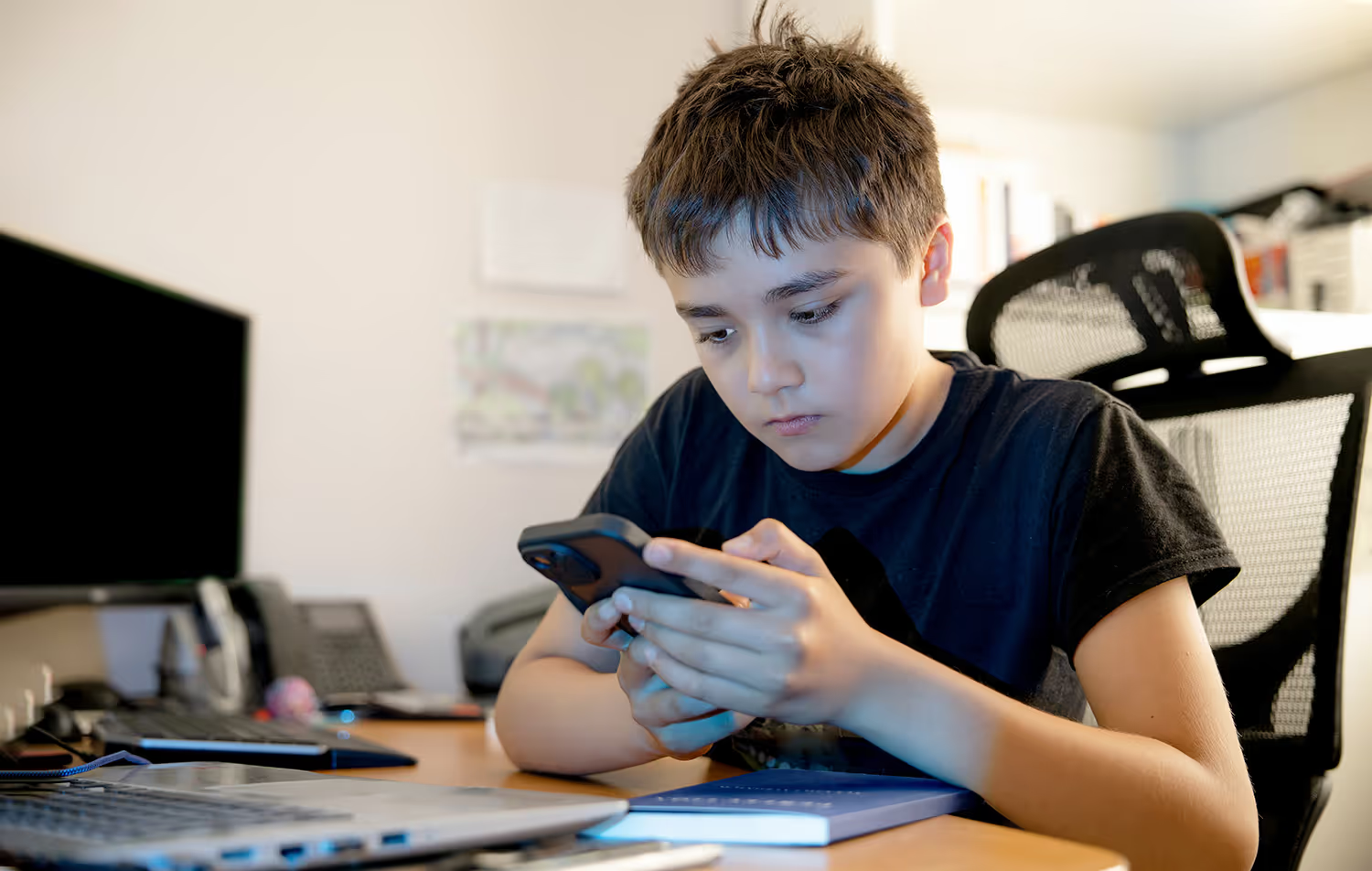
For many children and young people, having a smartphone can feel less like a choice and more like something they need in order to belong.
When they say “everyone else has one”, that feeling is very real. It can make it difficult for children and parents, to feel confident doing something different.
Social media and messaging platforms are designed to keep young people connected, but they can also create a constant pressure to stay engaged. This might look like feeling left out of group chats, worrying about missing something, staying up late to reply, or comparing themselves to others and feeling like they don’t measure up.
For parents, this can feel like a difficult balance, wanting to protect your child, while also not wanting them to feel excluded.

What's really going on?
Peer pressure around smartphones isn’t really about the device itself, it’s about belonging.
Children are naturally wired to seek connection, acceptance and identity through their peers. Social media can amplify this by making social dynamics visible all the time, increasing comparison, and creating a fear of missing out. It also blurs the boundaries between school, home and rest, meaning there is very little space to switch off.

There isn’t one single answer, but small, consistent steps can make a big difference.
Creating space for your child to talk about what’s happening online, without fear of getting into trouble, helps them feel safe to share.
Supporting children to feel secure in who they are, away from social media, can reduce the pull of needing validation online.
When families make similar choices, it reduces the pressure on children. You can join the Smartphone Free Childhood parent pact, and locally we have a Solihull WhatsApp group where parents can support each other and share experiences.
Friendships, activities and time offline are where children build confidence, resilience and a genuine sense of belonging.
If your child does have access to technology, working together to set clear, age-appropriate boundaries can help them feel involved and supported


When your child says… “Everyone else has one”
This is one of the most common and most difficult conversations.
How you respond can really shape how your child feels in that moment.
Start by acknowledging how it feels.
“I understand why that feels hard.”
“It’s not nice feeling like the only one.”
Stay calm and confident in your decision. “Different families make different choices, and this is what we feel is right for you right now.”
Gently challenge the idea of “everyone”
“It can feel like everyone, but there are other children in the same position too.”
Offer alternatives, not just a no:
Keep the conversation open. Let them know this isn’t fixed forever, “We can keep talking about this” and review things together over time.

Sign the commitment