





Sign the
commitment



The first five years of a child's life are full of wonder, curiosity and rapid development. During this time, children's brains are growing and changing at an incredible rate, laying the foundations for communication, relationships, emotional wellbeing, learning and physical development.
Today's children are growing up in a world where screens are part of everyday life. Technology can bring benefits and convenience, and most families use screens at times throughout the day. At the same time, the early years are when children learn most through play, exploration, movement, conversation and connection with the people around them.
At Solihull IRL, we believe in helping families find a healthy balance that works for them.


By the age of five, around 90% of a child's brain development has already taken place. The experiences children have during these years help shape how they communicate, build relationships, manage emotions and engage with the world around them.


The more opportunities children have to explore the real world, the more opportunities they have to develop the skills they need for later life.

There is currently no evidence that supports one specific amount of screen time that is right for every child.
The UK Chief Medical Officers encourage parents and carers to think about how screens fit into family life and whether they might be affecting:
Rather than focusing only on the number of minutes spent on a screen, it can be helpful to ask: Is screen use supporting my child's development, or is it getting in the way of the things they need most right now?
UK Chief Medical Officers' Screen Time Guidance for Parents and Carers

Babies and toddlers learn through interaction with the people around them. Everyday moments such as chatting while getting dressed, reading stories, singing songs, sharing meals and playing together all help build strong foundations for learning and development.
The government's Best Start in Life guidance highlights the importance of these interactions in the early years.
Video calls with family and loved ones can be a positive use of technology because they involve real interaction, but wherever possible, screens should complement rather than replace opportunities for play, exploration and connection.
Play is one of the most powerful tools for learning
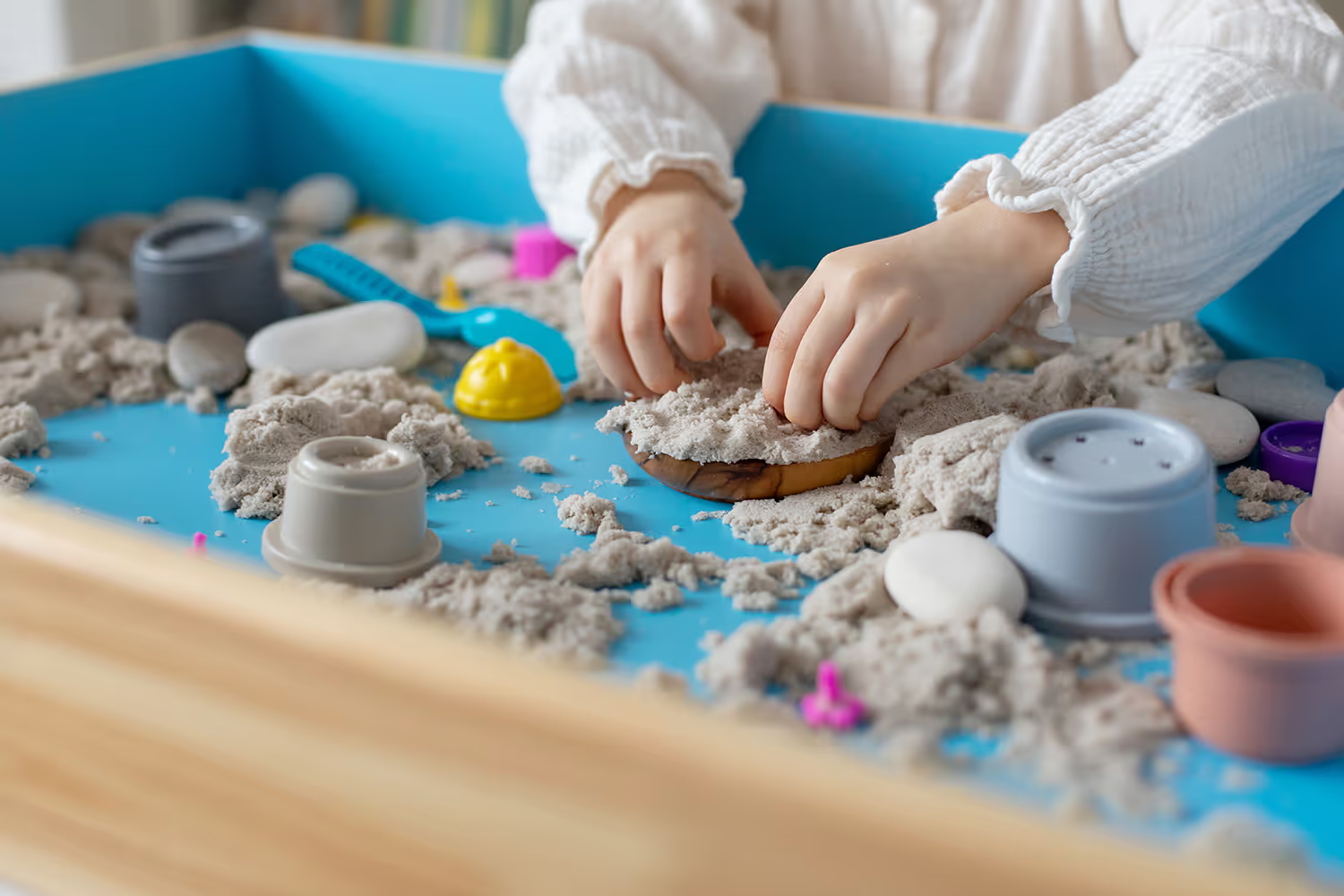
Play helps children make sense of the world around them. Through play, children learn to communicate, solve problems, manage emotions, develop friendships and build confidence.
Research consistently shows that play supports:


Children do not need expensive toys or perfectly planned activities. Some of the most valuable experiences come from everyday moments spent together.
Creating healthy digital habits from the start
The habits children develop in the early years often shape their future relationship with technology.
Simple approaches can help create a healthy balance:
Children learn as much from what they see us doing as they do from what we tell them.
As children grow, technology often becomes a bigger part of everyday life. Families may begin thinking about tablets, gaming, online safety, messaging apps and eventually smartphones.
Across Solihull, many schools are introducing smartphone-free learning environments to help children focus on learning, friendships, play and real-world interaction throughout the school day. These approaches recognise that childhood is a time for developing confidence, communication skills, resilience and healthy relationships both online and offline.
Every family will make different choices about technology, and there is no single approach that works for everyone. What matters most is helping children develop healthy habits and a balanced relationship with screens as they grow.
The conversations, routines and experiences children have in their early years often become the building blocks for how they engage with technology later in childhood and adolescence. Creating opportunities for connection, play, independence and real-world experiences now can help children navigate the digital world with greater confidence in the future.
As national guidance for school-aged children and young people (5–16 years) becomes available through the Best Start in Life programme, we will continue to update Solihull IRL with trusted information, practical advice and resources for families.
Even very young children can come across online content that is confusing, upsetting or inappropriate. Parents and carers can help children stay safer online by:
The Department for Science, Innovation and Technology also provides information about the Online Safety Act and how children are protected online.
Every family is different, and sometimes it can be helpful to talk things through with someone else.

Family Hubs offer advice, activities and support for families from pregnancy through to young adulthood. They can help with parenting, child development, wellbeing and accessing local services. Whether you are looking for advice, activities or simply a place to connect with other families, your local Family Hub can help.

Ordinary Magic provides emotional wellbeing, family support and early intervention services for children and families across Solihull, including specialist support during the early years. Their team offers a range of services designed to help children thrive and support parents through the challenges that can sometimes come with family life.

Parenting can be rewarding, but it can also bring challenges and questions at every stage of a child's development. The Solihull Family Helpline offers free advice, support and guidance for parents, carers and professionals who may need a little extra help. Whether you're looking for support with parenting, child behaviour, school attendance, family relationships, or your child's emotional wellbeing, the team can provide practical advice and connect you with local services that may be able to help.


The goal is not perfection, and it is not about removing screens completely.
It is about creating a healthy balance that gives children plenty of opportunities to play, explore, move, connect and discover the world around them.
Small moments matter. Shared stories matter. Muddy puddles, playground adventures, cuddles, conversations and family time all matter.
Because smartphones can wait.
Childhood can't.
Sign the commitment